HEC-OVI

Hector
Oviedo

Senior Applied AI Engineer

Agentic Engineering23+years of software engineering

An agent is only as good as two things:

/01The context it reads
The toolkit it runs/02

Context engineering and agentic tooling, applied end to end. Everything below is proof of one or the other.

23+

Years of engineering

Building software since 2003: games, enterprise, applied AI.

50+

Verified repositories

Public on GitHub: every claim on this page is verifiable commit by commit.

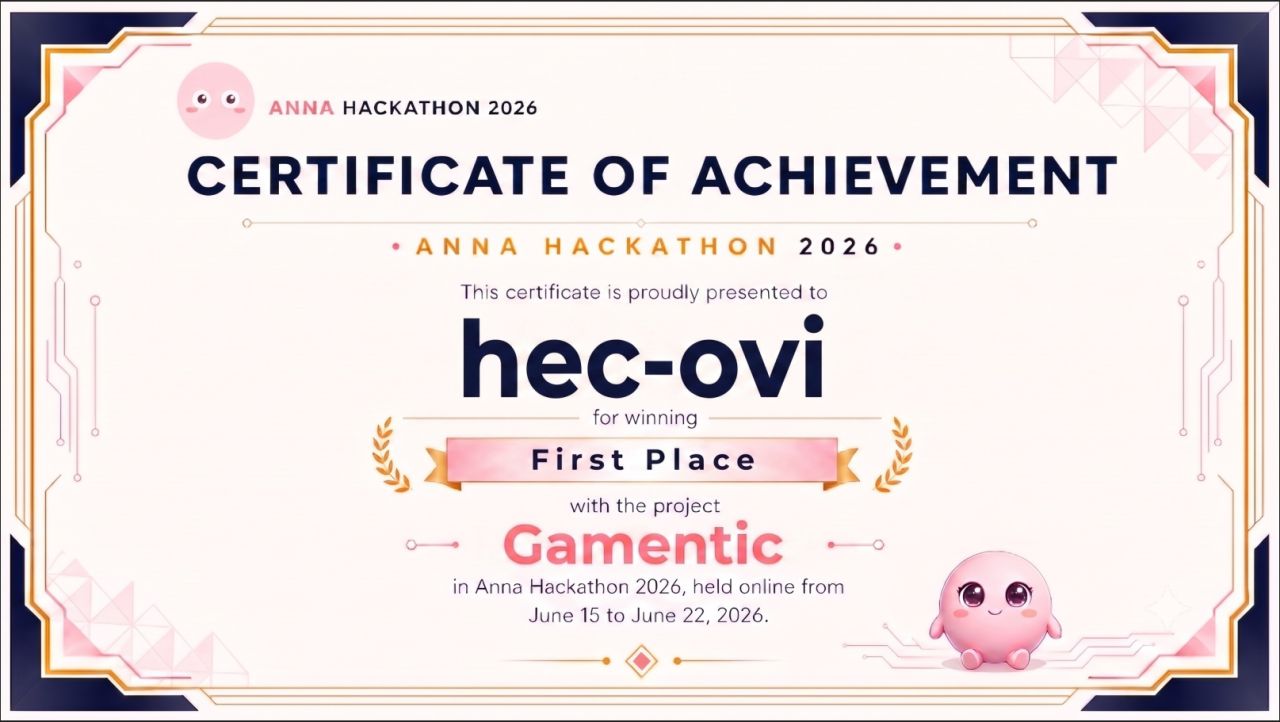
1st

Anna Hackathon 2026

Verified win: the announcement is public on the Anna Partners account.

13

Verified recommendations

Real LinkedIn recommendations, on the record, six from direct managers.

Professional career

Experience

Agentic engineering, proven by 23 years of software engineering.

40+ toolkits

Agent Skills, skills tooling, and MCP servers, published and verified: public on GitHub, PyPI, and npm.

Loops & workflows

Agentic loops and gated workflows running unattended in production, 24/7, verifiable live.

Human-in-the-loop

Architecture, specs, integration tests, security review, and deployment stay human-owned.
01Mar 2025 - Jan 2026

I fixed the core agent's hallucinated integrations: free-written API code became deterministic template injection.

Ohara was an early vibe-coding platform: a hosted agent that turns a prompt into a deployed application. I owned the agent architecture end to end: context and prompt engineering, multi-agent design, tool and MCP integrations, and the DevOps around each build's VM. I scoped every release with stakeholders and third-party API teams.

30+skill instruction sets, before Agent Skills had a name
10generative vendors behind one validated interface
3transports wired over MCP: HTTP, SSE, WebSocket

Architecture

Interface injection. I replaced free-written integrations with a validated interface the model cannot deviate from: no hallucinated APIs, no auth failures, no context degradation.

Multi-agent refactor. I split the monolithic agent so no single context window holds a whole build.

Web3 workflow. I built the workflow that takes agent-written Solidity through compile, audit, sign, deploy; escrow games ran on it in production.

Built on top

Asset chains. I built a sprite-sheet tool returning 16 game-ready assets per generation, and a text-to-3D chain delivering GLBs into the agent's VM.

Games and realtime. I wrote the Three.js and Phaser instruction sets; multiplayer ran over Ably and SpacetimeDB, a Rust backend per VM.

Releases. I scoped releases with stakeholders and coordinated directly with the Flaunch and Polymarket API teams.

Ohara

Senior AI Solutions ArchitectContract · Remote

02Nov 2018 - Jun 2024

I built AI enterprise software for banks and government for six years, before the hype cycle had a name.

ADGS is a deep-technology company in Doha building AI for banks, government, and the private sector. We worked with our own proprietary AI models: an agent-based epidemic simulator, a behavioral-biometrics model trained per user, predictive maintenance for capital assets. I owned the presentation and integration layers that put those models in front of their users.

2020WISH names Pandexit a promising health innovation
3AI products in production: Pandexit, STROKK, CARP

In production

Pandexit. I built the full frontend and integration layer of a real-time agent-based COVID simulation: Leaflet map and heatmap streaming live state over WebSocket, a JSON-configured form engine driving the parameters.

STROKK Mobile. I built the biometric capture end to end: a custom keyboard logging per-key timing and pressure, plus motion sensors; one model trained per user.

CARP. I built the presentation layer of a predictive-maintenance model for capital assets.

Early AI

OpenAI APIs. I wired them into internal tools as they appeared and hand-rolled tool calling before LangChain existed.

NLP head-to-head. I dockerized an NLP service comparing BERT, spaCy, regex, and word2number head to head, mailing automated PDF reports.

ADGS

Senior Full-Stack DeveloperFull-time · Doha, Qatar

03Nov 2015 - Nov 2018

I built casino games running real money on physical hardware, and implemented AI early: a face-recognition AI API in production in 2015.

Grupo Ayex builds gaming systems for physical casino floors. I worked inside the engineering team that owned the machines themselves: dual-monitor slant-top cabinets, hardware device integration, ticket printing, and the C# services behind them, with the game logic and animation layers on top.

2certified games playing with real money on casino hardware
2015early AI implementation: face-recognition AI API in production

In production

Casino hardware. I built two certified games for dual-monitor slant-top machines: device integration, C# API, ticket printing, animations, bonus stages.

Mobile roulette. I built a production vanilla-JS roulette with OBS live video, plus a multi-slot Android platform.

Ahead of schedule

Azure Face API. I put age and identity verification at casino entry into production shape in 2015; legal shelved it, the system worked.

Unity AR. I prototyped a QR-card 3D AR game and built the operational dashboards.

Grupo Ayex

Full-Stack / Game DeveloperFull-time · CABA, Argentina

04 — 2003 - 2015

I spent the first decade building games and interactive products; agents inherited that discipline.

2015Globant, for Electronic ArtsFrontend MVVM DeveloperPS3/Xbox titles (NHL, UFC), Lua and ActionScript.Scrum across distributed AAA teams, Perforce, and console-certification constraints.
2014 - 2015Santo MateFrontend Lead DeveloperLed a team of 3; modular AS3 slot framework of my own design, 4 slot games in production.One framework, four titles in production: build once, reskin each time.
2013Dedo InteractiveUI/UX DeveloperCampaign banners (Netflix), landing pages, native Android event apps.Managed by Gonzalo Pedreira, whose recommendation appears in the Recognition section.
2011 - 2013Liquid Designers (MyLingo)DeveloperLive Professor, a live video-teaching platform end to end: AS3 + Red5 streaming, PHP API, whiteboard, chat.One engineer owning streaming, API, whiteboard, and chat, used by working teachers.
2010 - 2011Workroom Partner DigitalActionScript DeveloperLanding pages for Viceroy, Samsung, Peugeot.Plus an AS3 comic generator with PHP uploads and community voting.
2007 - 2010Global 360DeveloperLanding pages and campaigns for international digital marketing, remote.Remote delivery for international clients, years before remote was standard.
2003 - 2007FreelanceWeb DeveloperInteractive websites end to end for US clients, remote.First US clients in 2003: remote work from day one of the career.

Games first

Agentic Engineering - SWE

Applied AI

Agentic loops and agentic workflows: planning, tool calls, context engineering, output verification, and recovery when a step fails, plus the skills and custom tooling the loop runs on. Agentic workflows fit into a product you already have; an agentic loop can be the product itself. Censurado runs one unattended, publishing daily on its own.

More than 23 years of software engineering, now orchestrating coding agents across any stack. The bulk of the code is AI-generated; architecture, specs, integration tests, security review, and deployment stay human-in-the-loop. The proof is open source and live in production today.

Installable tooling for any agent, harness, or CLI: Docker-isolated skills, npm and Python packages, MCP clients and servers over stdio or Streamable HTTP, from generative AI to web3. More than 10 tools published on GitHub, PyPI, npm, and the MCP Registry.

Inference tuned for your hardware plus the agentic harness to run agents on premises: quantization, speculative decoding, custom kernels, context engineering. OpenAI-compatible endpoints, so your code keeps working and your data stays private. Benchmarks published with the config.

Selected work

Projects

Four systems, each proving one part of the practice.

El Censurado, self-publishing AI news portal

ProductionSelf-publishing news portal

  • Full agentic workflow as an installable skill
  • 32-tool MCP server in Python
  • Go backend, dockerized
  • Static frontend on a CDN
gamentic, multi-agent AI dungeon RPG

1stplace · Anna AI-Native App Hackathon 2026

  • Local LLM inference on llama.cpp Vulkan
  • Image generation with ComfyUI FLUX.2
  • Maya1 TTS with per-scene emotion
  • World state behind 40 validated tools
noob-cli, Rust agent CLI with GPU front end

RustAgent CLI with a GPU front end

  • Concurrent multi-agent management
  • Every tool call inspectable locally
  • Agentic workflow planning
  • One 4.3 MiB static binary in Rust
vllm-awq4-qwen, optimized local inference on AMD Strix Halo

Local inferenceCustom HIP kernel on AMD Strix Halo

  • Custom HIP kernel optimization
  • AWQ-INT4 quantization, 256K context
  • +340% decode via speculative decoding
  • 18 patches carried against vLLM

Case study · Agentic workflow

El Censurado

A news portal that publishes itself.

elcensuradoweb.com runs unattended: an agentic brain with 32 tools walks a gated editorial sequence on a 24/7 loop, decides what is worth writing, and falls back across agents (Gemini, Codex, Claude, a local model) when one fails. Synthetic authors carry their own bias and source lists. Publishing daily, 21+ pages of archive.

Read it live

32

tools on the MCP server

14

gated editorial steps

24/7

unattended loop with agent fallback

synthetic authors, each with their own bias and sources

The editorial walk

Fourteen gated steps end to end. The six that decide what readers see run alongside; the three repos behind them are public.

001ResearchScans sources, scores what is worth covering, picks the angle.
002DraftThe assigned synthetic author writes in its own voice and bias.
003EvaluateA separate pass grades the draft; weak pieces go back or die.
004Fact-checkClaims are checked against sources before anything ships.
005IllustrateArt generated per piece, consistent with the author's register.
006PublishAppend-only publish API; the reading path is static on a CDN.

Case study · Multi-agent system

gamentic

1st place, Anna AI-Native App Hackathon 2026.

An AI dungeon RPG where the engine is the multi-agent system: a narrator orchestrates the world while every character runs as its own agent with isolated context and evolving memory. The SQLite world state changes only through validated tools, so a long adventure stays consistent instead of drifting. Runs cloud-driven or fully local on one AMD Strix Halo APU.

/01Narrator orchestratorDrives the story and the world through 40 validated tools; nothing writes state directly.
/02One agent per characterIsolated context and evolving memory per NPC, so personas do not bleed into each other.
/03State machine ground truthSQLite world state as the single source of truth; the tools are the only way to change it.
/04Local multimodal stackText on llama.cpp/Vulkan, images on FLUX.2 klein via ComfyUI, voice on Maya1 with per-scene emotion.

Repos · Installable tooling

Agent tooling

text-to-3D-skill

A prompt to a rigged, game-ready GLB, fully local. 143 tests.

  • Skill
  • MCP
  • Generative
25

FLUX.2 klein draws the concept, TRELLIS.2 builds the mesh on a Vulkan-only engine, and headless Blender rigs a measured skeleton with idle, walk, run, and jump. A face-count target keeps every output inside a game budget.

blockchain-skill

Non-custodial wallet operations for agents on EVM and Bitcoin.

  • Skill
  • MCP
2

Send, swap, bridge, sign, deploy and verify Solidity. Every contract is proven on a local EVM before a real network sees it, and keys never leave an encrypted local keystore.

research-skill

Project-scoped knowledge base that survives context compaction.

  • Skill
  • Plugin
12

On DeepResearch Bench II the brief lifts a Haiku 4.5 agent from 56.2% to 64.2% weighted, same model, same judge. Findings persist per project, and a contrarian pass argues against the draft before it lands.

websearch-skill

Keyless multi-engine search and page reading for agents.

  • Skill
  • CLI
  • MCP
5

9 keyless engines plus ~280 via self-hosted SearXNG, de-correlated rank fusion, Tor for .onion reading. Pages arrive as paginated Markdown fenced as untrusted, so a site cannot steer the agent. On PyPI and the MCP Registry.

agentickit

React copilot framework: the agent drives your UI.

  • npm
  • Toolkit
31

Fills forms, opens dialogs, renders components, reads app state, calls your tools, and confirms destructive actions. AG-UI under the hood; a registry maps a different assistant to each page or permission level. 579 tests, 4 runtime deps.

telegram-bot-skill

Any local coding agent as a private Telegram bot.

  • Skill
  • npm
  • MCP
1

The live session is reachable over MCP, stdio or Streamable HTTP. A deterministic tier gate (owner, trusted, guest, blocked) runs before any model sees a byte; onboarding is one QR scan. Zero-dependency Node core, 87 tests.

ocr-skill

Local image and PDF to Markdown OCR for agents.

  • Skill
  • CLI
1

A portable SKILL.md plus a self-contained CLI on DeepSeek-OCR-2 over llama.cpp. Paginated extraction sized for context windows, output fenced as untrusted.

gmail-skill

Gmail behind plain agent commands.

  • Skill
  • CLI
  • MCP

OAuth login, search, thread reading, drafts, send with attachments, labels.

Repos · Runs on your hardware

Private AI stack

llama-vulkan-strix

llama.cpp serving on Vulkan for gfx1151, dense to MoE.

  • Server
  • Docker
201

GGUF weights pinned to GTT let 128 GB of unified memory serve models past the VRAM budget; the opt-in ROCm FP4 + MTP stack reaches 119 t/s decode on a 35B MoE, and a 118B MoE serves at 22 t/s.

rag-base

Self-hosted hybrid retrieval, 19 endpoints, no LangChain.

  • API
  • Docker
4

pgvector + ParadeDB BM25 + a LightRAG graph on Memgraph, BGE-M3 embeddings, four rerank modes. The published eval shows hit@5 saturating at 1.00 across hybrid channels, and where the reranker costs MRR and 28 seconds, which is why rerank stays per-query opt-in. 115 integration tests.

comfyui-strix-docker

The base image for every generative project here.

  • Docker
4

ComfyUI pinned to TheRock ROCm wheels on gfx1151, fixing the silent CPU fallback stock Debian and Python 3.13 images hit.

rebel-forge

Self-hosted agentic social product on the private stack.

  • Product
  • Docker
1

A worker runs research to draft to review to publish unattended, posting to X, LinkedIn, Facebook, and Threads and reading engagement back the next cycle. LLM and image layers point at local endpoints or hosted vendors, swappable per layer.

vllm-qwen

BF16 OpenAI-compatible serving for Strix Halo.

  • Server
  • Docker
16

256K context on TheRock ROCm; the unquantized sibling of the AWQ-INT4 work.

Repos · Loops in production

Agentic workflows

elcensuradoweb.com

A news portal that publishes itself around the clock; the workflow is the product.

  • Production
  • 24/7

» Research» Draft» Evaluate» Fact-check» Illustrate» Publish

gamentic

One adventure, many agents: the narrator orchestrates while every character keeps its own context.

  • Multi-agent
  • Winner
185

» Player input» Narrator plan» Validated tools» SQLite state» NPC agents» Image + voice

open-research

Deep research as a pipeline of five agents passing work down the chain, on local inference.

  • Pipeline
  • Local
5

» Planner» Finder» Summarizer» Reviewer» Writer

noob-cli

The agent loop as a harness: budgeted context, inspectable tool calls, one static binary.

  • Rust
  • Harness
3

» Plan» Act» Observe» Compact» Repeat

Capabilities

Stack

01 / 04

Agentic Systems

Multi-agent orchestration and workflows, MCP servers and clients, tool schemas and agentic tooling, context and prompt engineering, context budgets.

  • Multi-agent
  • MCP
  • Agent Skills
  • Context engineering

02 / 04

Applied AI

Models put to work inside real software: retrieval over your data, computer vision, multimodal generation, built into features that solve a concrete problem.

  • RAG
  • Knowledge graph
  • Computer vision
  • Generative AI

03 / 04

Infrastructure

Local and hosted inference, quantization and serving tuned per board, Docker, REST/SSE/WebSocket APIs. Verifiable in the repos: a custom HIP prefill kernel, 18 patches carried against vLLM, weights pinned to GTT, benchmarks published with the config.

  • vLLM
  • llama.cpp
  • ROCm
  • Docker

04 / 04

Languages

PythonTypeScriptRustGoJavaScript

EarlierC#, Lua, ActionScript, PHP

Frameworks & infraReact, Next.js, FastAPI, Node.js, Postgres, SQLite, Docker, Three.js, Phaser, Terraform + AWS

Third-party proof

Recognition

Anna AI-Native App Hackathon 2026

1st

Won with gamentic: a narrator and every NPC run as separate agents over a SQLite world state that only changes through 40 validated tools. Text, image, and voice on one desktop APU, cloud-driven or fully local.

Announcement

World Innovation Summit for Health: Pandexit

2020

Pandexit, the ADGS COVID-variant simulator whose dashboard I engineered end to end, was named one of 15 promising 2020 health innovations by WISH. Press coverage credits me by name.

Press release, PRWebEIN Presswire

Mark Sullivan · March 2026

Product at Ohara, managed Hector directly

Hector is downright one of the most tenacious engineers I've ever worked with. He architected many of the novel agent orchestration solutions we deployed before even the most prominent AI research labs. If you get the chance to have him on your team, do not pass it up.

Validated on LinkedIn

Noah Madden · July 2025

Founder of Seeker, managed Hector at Ohara

I manage Hector as the lead for prompt engineering at Ohara. He consistently delivers fast, high-quality results, showing strong reliability and ownership. He's a team player, quick to share solutions, and brings a lot of innovation to our AI workflows. I would highly recommend Hector for any advanced AI roles.

Validated on LinkedIn

Christophe Billiottet · February 2024

CEO and founder of ADGS, managed Hector directly

I highly recommend Hector, whose exceptional performance at ADGS truly stands out. His ability to quickly grasp complex requirements and deliver outstanding results has made a significant impact. Hector's work ethic, speed, and adaptability to diverse projects are remarkable, and his willingness to contribute extra time and expertise has greatly enhanced our team's success.

Validated on LinkedIn

Salvino A. Salvaggio · November 2024

Board-level advisor to ADGS, ex McKinsey

In my advisory capacity to ADGS I have closely collaborated with Hector and have consistently been impressed by his expertise and impact on their key projects. [...] His technical depth and cooperative nature are assets to any project or team he joins, and I recommend him highly for roles that demand both expertise and a collaborative approach.

Validated on LinkedIn

Gonzalo Pedreira · November 2024

Co-Founder of Contexto.ar, managed Hector at Dedo Interactive

I had the pleasure of working with Hector at Dedo Interactive, where he consistently demonstrated both technical expertise and creativity. As his project manager, I saw firsthand his ability to develop engaging ActionScript banners for a high-profile Netflix campaign, and his skills extended well beyond. Hector also designed full-stack native Android applications for event experiences and delivered high-quality, full-stack JavaScript landing pages. His dedication and versatility make him an asset to any project.

Validated on LinkedIn

Recognized voice on r/StrixHalo: measured local-inference benchmarks published with their configs and defended in the comments. r/StrixHalo

Formation

Studies

Coursework

IU International University of Applied Sciences: Applied Artificial Intelligence coursework, 2023 - 2026.

First year completed (8 modules), remote from Argentina. Every module project is a public repo.

Cloud Programmingsnakeless

Serverless patterns on AWS: Lambda, DynamoDB, S3/CloudFront behind Terraform.

OOP with Pythonhealthhub

Class design and data modeling on a working health application.

Computer Visioncomputer-vision

Comparative paper: YOLOv8 vs Detectron2 vs EfficientDet, with a frame-by-frame analysis frontend.

Technical High School Diploma, Personal and Professional Computing, EET N°468, Argentina.

Self-taught, in production

The rest is self-taught in production, adopted as each wave landed: not courses, working systems.

2015

Cloud AI in production: Azure Face API verifying age and identity at casino entry.

2018

NLP before the hype: BERT, named-entity recognition, text semantics, and sentiment compared head to head in a dockerized service.

2022

OpenAI APIs wired into internal tools at release, with hand-rolled tool calling before LangChain existed.

2024

Local inference: quantization, custom HIP kernels, published benchmarks on AMD Strix Halo.

2025

Agentic engineering as the delivery model: agents type, architecture and review stay human.

Questions

FAQ

/01

The practice

10 questions

The discipline Karpathy named at Sequoia AI Ascent 2026 in his 'From Vibe Coding to Agentic Engineering' talk: you orchestrate fallible agents instead of typing most of the code, and you keep the parts that decide whether the result is correct. Specs, architecture, diff review, evals, integration tests, security review, deployment.

A workflow is a sequence of steps, each one a set of instructions the agent carries out with the tools it is given, refined by iteration until it does the job reliably. A loop is open-ended: the agent plans, calls a tool, reads the result, and decides what to do next until the goal is met. Most real systems are both. Censurado runs a 14-step editorial sequence inside a 24/7 loop that drives 32 tools and falls back to another agent when one fails; it publishes on its own at elcensuradoweb.com. gamentic is the multi-agent version: a narrator plus one agent per character, writing to a state machine that only changes through 40 validated tools. open-research is the pipeline version: five agents passing work down the chain.

Agents do most of the typing. I do the architecture, the specs, the diff review, the tests, and the security pass, and I own the result either way.

Yes. I apply AI inside a product you already have, or build the product around it. On an existing product it is usually retrieval over your own data, an agent layer on top of what already works, or a vendor pipeline wired in: at Ohara I added multi-agent architecture, MCP integrations, and a multimodal layer over ten vendors to a platform that was already live. From scratch it looks like Censurado, gamentic, or open-research.

That pattern, yes: one engineer owning scope, build, integration, and deployment, customer-facing through the integration phase. It is how I have worked on contract for the last two years.

At Ohara I split a monolithic agent into a multi-agent architecture, decoupling logic, UI, and asset-generation streams so no single context window had to hold the whole job. gamentic runs a narrator plus one agent per NPC, each with bounded context and memory, over a world state that only changes through 40 validated tools. open-research runs a five-agent research pipeline on local inference.

Both, and they run in my own systems. The Censurado brain exposes 32 tools over MCP that an agent drives to research, write, and publish. telegram-bot-skill, blockchain-skill, and text-to-3D-skill each ship an MCP server, over stdio or Streamable HTTP. At Ohara, MCP middleware connected an autonomous coding agent to generative-media APIs, web3, and real-time data.

Agent Skills are how a generic coding agent learns your codebase, your stack, and your conventions. I have published more than ten (research, websearch, gmail, telegram-bot, blockchain, ocr, text-to-3D, among others) and I wrote 30+ instruction sets at Ohara before the format had a name. For a client the deliverable is the same: a fresh agent that delivers in your repo.

Hybrid retrieval built around the shape of your data: pgvector for semantic, ParadeDB BM25 for lexical, a LightRAG graph for entity-rich domains, reranking on top. rag-base is the working reference: 19 endpoints, BGE-M3, four rerank modes, no LangChain. Its eval harness reports hit@1, hit@5, and MRR, including the configurations where the reranker makes results worse.

Two decisions carry most of it: what the model is allowed to write, and what enters its context. At Ohara I removed hallucinated API code from generated apps by replacing free-written integrations with deterministic template injection, so the model filled a validated interface it could not deviate from. The same approach runs through my repos: state-machine grounding in gamentic, source-checked publishing in Censurado, explicit context budgets in noob-cli.

/02

Capabilities

5 questions

AMD is where I do the hard version. vllm-awq4-qwen serves Qwen 3.6-27B AWQ-INT4 on a Strix Halo APU (gfx1151, 128 GB unified memory) at 24.8 t/s with 256K context, which needed a custom HIP prefill kernel and 18 patches carried against vLLM. llama-vulkan-strix does the llama.cpp side on Vulkan with GGUF weights pinned to GTT. CUDA is the easier target and is equally in scope.

Yes. My degree module benchmarked YOLOv8, EfficientDet, Detectron2, and SAM2 head to head for detection and segmentation in video, with a frame-by-frame analysis frontend. In client work vision is usually one step inside a larger loop: inspection, monitoring, or document understanding feeding something downstream. That is how I scope it.

At Ohara I owned the orchestration layer across Hedra, HeyGen, Luma, Veo 3, Runway, GPT-Image, Flux, ElevenLabs, PlayHT, and Lyria 2, each behind one validated interface so vendors swapped without touching generated code. Locally: ai-music-studio plans an album and generates tracks and cover art, text-to-3D-skill takes a prompt to a rigged GLB, and comfyui-strix-docker fixes the silent CPU fallback stock images hit on gfx1151.

Security review is part of delivery. Unreviewed agent output has documented quality and security drift, so the diff gets read, load-bearing paths get integration tests, and anything that writes gets a dry-run mode and a permission gate. In my own skills, fetched pages and inbound mail are fenced as untrusted so a page cannot inject instructions into the agent.

10+ years of games and interactive products before AI: ActionScript and Lua at Globant for EA (NHL, UFC), slot frameworks at Santo Mate, casino games on dual-monitor hardware at Grupo Ayex, AR prototypes in Unity, a mobile JavaScript roulette system. Three.js and Phaser are normal scope, and gamentic and duplexity-3d apply that background to agent systems.

/03

Working together

9 questions

As CTO or technical co-founder for a team that needs a real product delivered: Agile delivery on a tight budget and a tight timeline, business requirements translated into scoped deliverables, stakeholder communication through the whole cycle, user validation once it is live. Not a fit: ML research or academic roles centered on model training, multi-week interview loops gated on live coding, and teams that ban agentic engineering.

Both. Contract is the default: a defined scope, a defined deliverable, a defined window. Full-time is open for the right team, particularly Applied AI Engineer or Forward Deployed Engineer roles at growth-stage AI companies.

USD 90 an hour for contract work, and USD 9,000 a month for a full-time engagement. Both cover the whole delivery: architecture, implementation, review, and the agent orchestration behind it. Longer windows and larger scopes are worth a conversation.

Business requirements gathered with stakeholders and translated into scoped deliverables; delivery in sprints with backlog management and product owners, QA, and UX in the loop; user validation, feedback analysis, and adoption monitoring once it ships. That cycle ran at Ohara, ADGS, and Grupo Ayex across distributed teams. Engagements here start the same way: one scoped workstream with a defined window, extended if the fit is right.

Based in Rosario, Argentina, working remote-global and async-first. US, EU, and AsiaPac overlap for sync work is normal. I have been paid through EOR and contractor arrangements for years, so the payroll side is well-trodden.

Remote engagements with EU companies are ordinary work. Spanish citizenship is in its final stage, which opens EU on-site work; until it lands, remote contractor or EOR arrangements both work.

No. Live coding measures hand-writing code instead of agentic engineering, which is how I deliver. What I can do is discuss architecture or work through a problem with you on a video call, and walk you through the architecture of any project on this page. My formation is the coursework I completed on the Applied AI degree at IU plus the portfolio on this page, all of it public on GitHub and verifiable commit by commit.

Not unpaid. A take-home is consulting work: scoped, delivered, and useful to you, so it goes at my hourly rate (USD 90) like any other engagement. Free alternatives are on the table: a call to discuss architecture or work through a problem, and a walkthrough of the architecture behind any project on this page.

Yes, and the privacy constraint usually decides the architecture: retrieval over the practice's own knowledge base, running on hardware you control if the data cannot leave. Intake and workflow automation, document analysis, and vision-augmented review are the common asks. The deliverable is a tool integrated into how the practice already works.